
Debt-to-equity Ratio Formula and Calculation
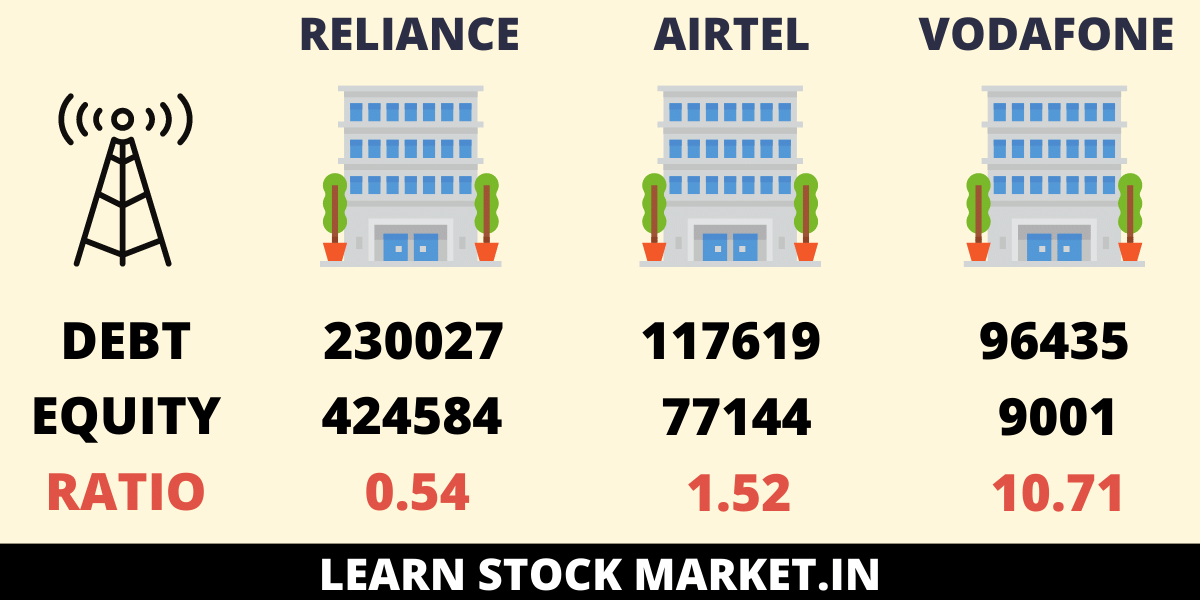
Essentially, equity is an investment in the company and assets are owned in order to generate operating revenue. Debt-to-equity ratio quantifies the proportion of finance attributable to debt and equity. Andy Smith is a Certified Financial Planner (CFP®), licensed realtor and educator with over 35 years of diverse financial management experience. He is an expert on personal finance, corporate finance and real estate and has assisted thousands of clients in meeting their financial goals over his career. Investors often scrutinize the Debt to Equity ratio before making investment decisions. A company with a high ratio might be seen as risky, whereas one with a lower ratio could be viewed as more stable.
Which of these is most important for your financial advisor to have?
All such information is provided solely for convenience purposes only and all users thereof should be guided accordingly. Different industries vary in D/E ratios because some industries may have intensive capital compared to others. If the D/E ratio gets too high, managers may issue more equity or buy back some of the outstanding debt to reduce the ratio. Conversely, if the D/E ratio is too low, managers may issue more debt or repurchase equity to increase the ratio. This could lead to financial difficulties if the company’s earnings start to decline especially because it has less equity to cushion the blow.
How to calculate debt-to-equity ratio in Excel
The data required to compute the debt-to-equity (D/E) ratio is typically available on a publicly traded company’s balance sheet. However, these balance sheet items might include elements that are not traditionally classified as debt or equity, such as loans or assets. A decrease in the D/E ratio indicates that a company is becoming less leveraged and is using less debt to finance its operations. This usually signifies that a company is in good financial health and is generating enough cash flow to cover its debts. As is typical in financial analysis, a single ratio, or a line item, is not viewed in isolation. Therefore, the D/E ratio is typically considered along with a few other variables.
Cheaper Than Equity Financing
However, the total debt ratio formula includes short-term assets and liabilities as part of the equation, which the debt-to-equity ratio discounts. Also, this ratio looks specifically at how much of a company’s assets are financed with debt. Because debt is inherently risky, lenders and investors tend to favor businesses with lower D/E ratios. For shareholders, it means a decreased probability of bankruptcy in the event of an economic downturn. A company with a higher ratio than its industry average, therefore, may have difficulty securing additional funding from either source.
“While debt-to-equity ratios are a useful summary of a firm’s use of financial leverage, it is not the only signal for equity analysts to focus on.” You can calculate the debt-to-equity ratio by dividing shareholders’ equity by total debt. For example, if a company’s total debt is $20 million and its shareholders’ equity is $100 million, then the debt-to-equity ratio is 0.2.
- Arguably, market value (where available of course) provides a more relevant basis for measuring the financial risk evident in the debt-to-equity ratio.
- Aside from that, they need to allocate capital expenditures for upgrades, maintenance, and expansion of service areas.
- This is beneficial to investors if leverage generates more income than the cost of the debt.
- This is also true for an individual applying for a small business loan or a line of credit.
Where long-term debt is used to calculate debt-equity ratio it is important to include the current portion of the long-term debt appearing in current liabilities (see example). The weighted average cost of capital (WACC) can provide insight into the variability of a company’s D/E ratio. The WACC shows the amount of interest financing on the average per dollar of capital. A company with a negative net worth can have a negative debt-to-equity ratio. A negative D/E ratio means that the total value of the company’s assets is less than the total amount of debt and other liabilities. However, start-ups with a negative D/E ratio aren’t always cause for concern.
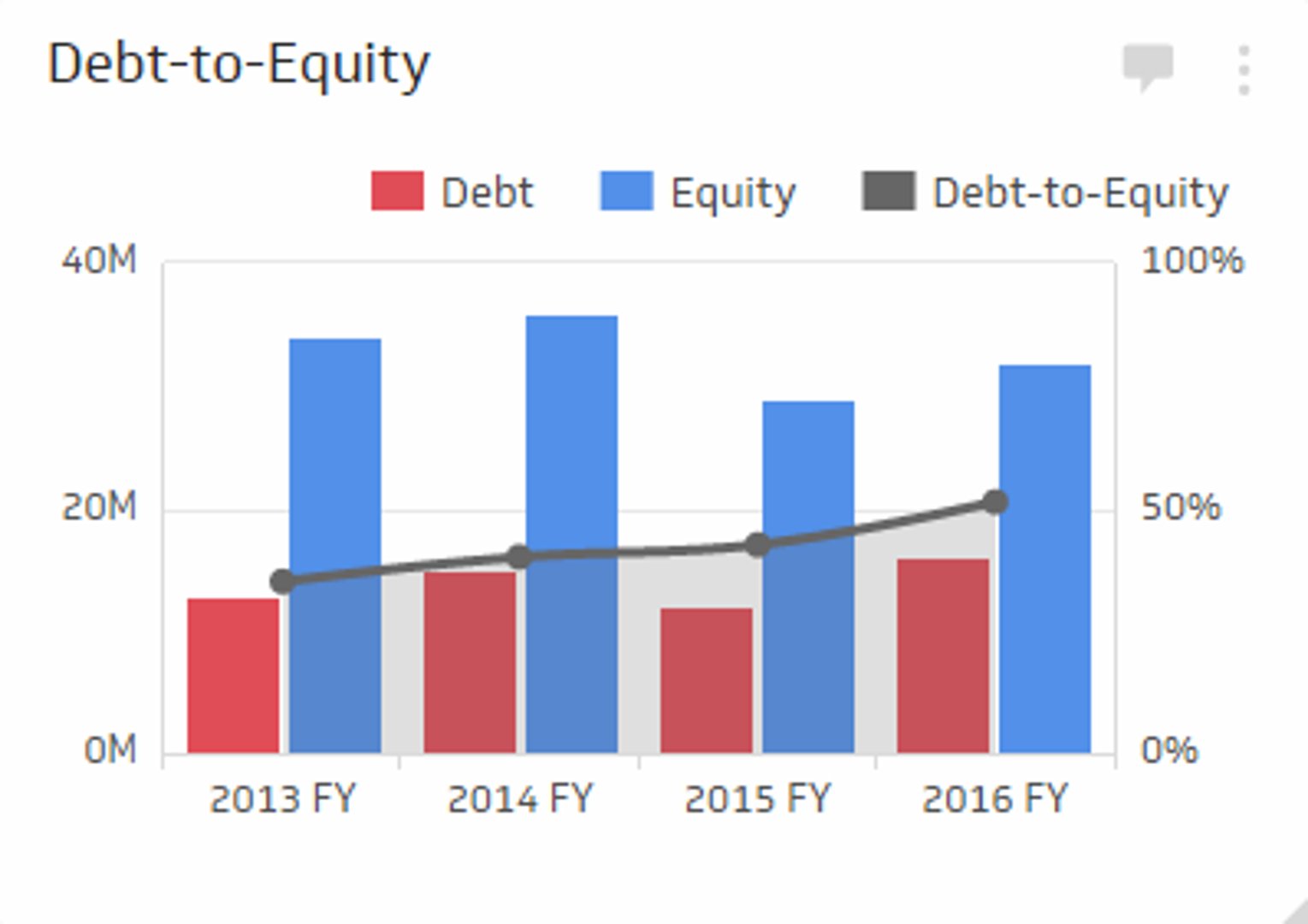
These balance sheet categories may include items that would not normally be considered debt or equity in the traditional sense of a loan or an asset. Because the ratio can be distorted by retained earnings or losses, intangible assets, and pension plan adjustments, further research is usually needed to understand to what extent a company relies on debt. Gauging if you’re within the typical range of your competitors is useful to a business owner.
Companies should aim for a balanced ratio to mitigate these risks while leveraging debt for growth. Different sectors have varying norms, and it’s essential to compare against industry averages. You could also replace the book equity found on the balance sheet with the market value of the company’s equity, called enterprise value, in the denominator, he says. “The book value is beholden to many accounting principles that might not reflect the company’s actual value.”
However, what is actually a “good” debt-to-equity ratio varies by industry, as some industries (like the finance industry) borrow large amounts of money as standard practice. On the other hand, businesses with D/E ratios too close to zero are also seen as not leveraging growth potential. A lower D/E ratio isn’t necessarily a positive sign 一 it means a company relies on equity financing, which is more expensive than debt financing. Conservative investors may prefer companies with lower D/E ratios, especially if they pay dividends. In some cases, investors may prefer a higher D/E ratio when leverage is used to finance its growth, as a company can generate more earnings than it would have without debt financing.
It’s not just about numbers; it’s about understanding the story behind those numbers. It suggests that a company relies heavily on borrowing to fund its operations, xero courses in melbourne often due to insufficient internal finances. Essentially, the company is leveraging debt financing because its available capital is inadequate.